
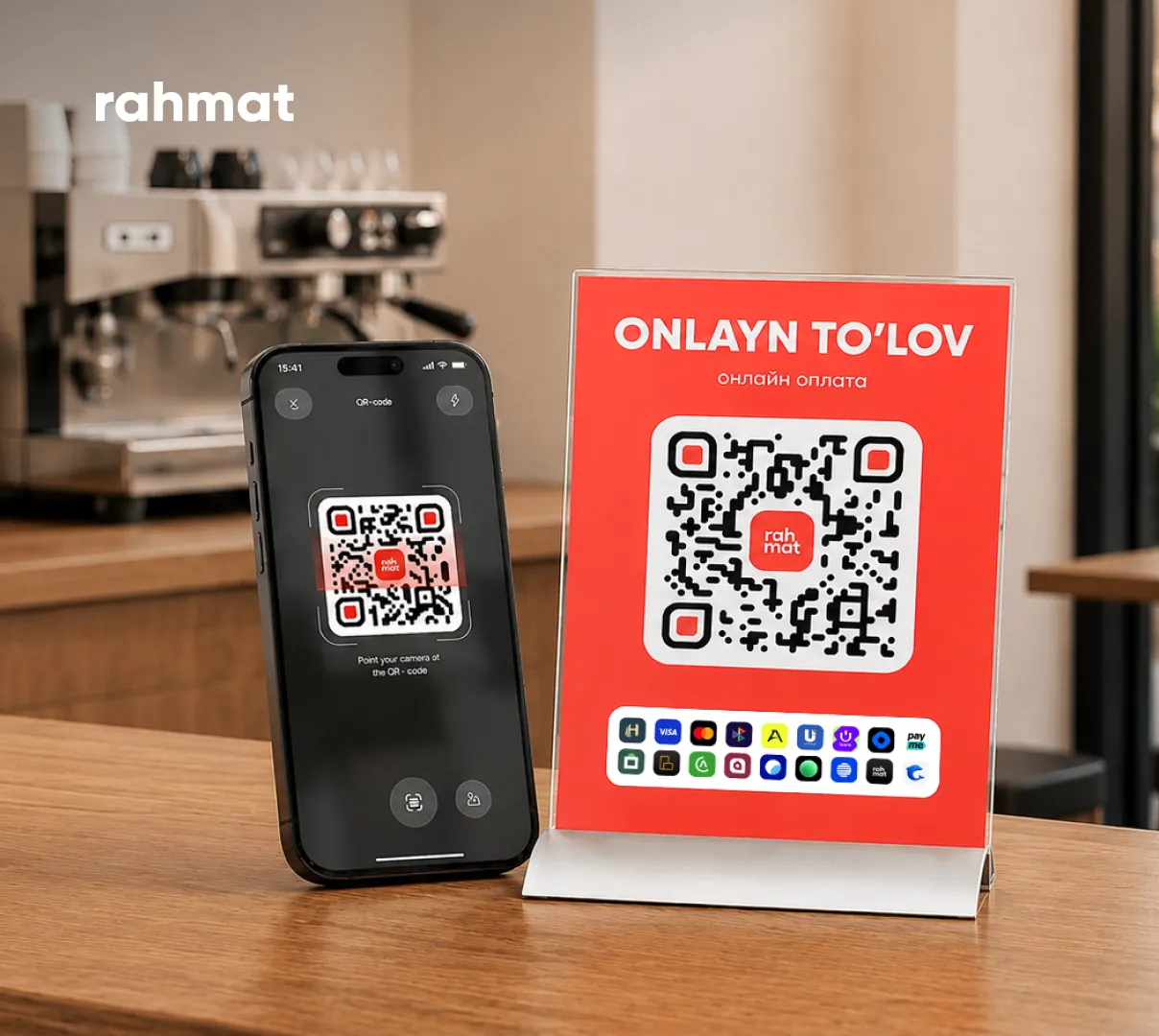
Unified QR
UzQR, the Central Bank standard.
What a unified QR code is
A unified QR code is a universal payment code that works to a standard introduced by the Central Bank. The system is called UzQR.
Checkouts used to display several codes from different services, and customers had to find the one that matched their app. The unified code solves this: the customer scans it with any banking or payment app, confirms the amount and receives an electronic receipt. The seller no longer has to adapt to the service the customer uses.
Who needs it
The requirement applies to legal entities in retail and services. Sole proprietors and the self-employed have been required to use a QR code to accept electronic payments since 1 January 2026.
In practice, a unified QR code is needed at any point that takes payments from individuals: a shop, café, salon, pharmacy or delivery service.
How to connect
A unified QR code is linked to a settlement account, so connection starts with a contract with an acquiring bank or a payment organisation. Once connected, the business receives its code. It is placed at the checkout, on a table, in a shop window or shown on the terminal screen.
A unified QR code needs no separate equipment, which is its main advantage for small outlets. If the checkout already has a terminal, it makes sense to connect the QR code to it. Then all transactions — card, contactless and QR — come together in one report instead of being split across different systems.
A unified QR code is not a formality for compliance but a way to shorten the customer’s path to payment. Connecting payments by unified QR code is covered on the Rahmat QR page.